
Jason Weiss scattered the last remaining bit of his mother’s ashes into the wind atop Mount Everest, at dawn, a few months ago.
“That was really special to me,” says Weiss ’17. He climbed the 29,032-foot mountain partially in honor of his mother, who died of cancer in 2020. The gesture struck him as funny, in a way. “She herself probably would have not loved the idea of me being on Everest,” he says. “She worried about everything, just as most mothers do.”
But she was only part of why he climbed. He also wanted to take a picture at sunrise from the highest peak in the world. “In photography, it’s all about the light,” he says. “And if you put yourself in incredible locations at moments of good light, it can be really special.” Most nature pictures are taken from ground level, he says, looking up. It’s rare that they’re taken from the top, looking down.
“And it’s incredibly rare that people are photographing from the top down, at sunrise, from these mountains.” Which means, he says, “you kind of climb up these mountains in the middle of the night.”
If you want to see the light, you have to do a lot of work in the dark.

Take it from Weiss, who is building a career as a photographer with a specific niche: climbing the world’s most challenging mountains to photograph the sunrise from their peaks.
“Before the [Everest] expedition, I didn’t even know if it would be feasible, with the cold and the climbing,” says Weiss. “But thankfully, our Sherpa was like, ‘Yeah, if we start by, I don’t know, 11 p.m. at night, we can probably get there by sunrise.’ And to be up there. I mean …”
He pauses. Other climbers and Sherpas they met at the top were “making fun of me and laughing at me because I’m up there with my big tripod.” But that’s what he’s there for. “Capturing something that very few times in history has been captured.”
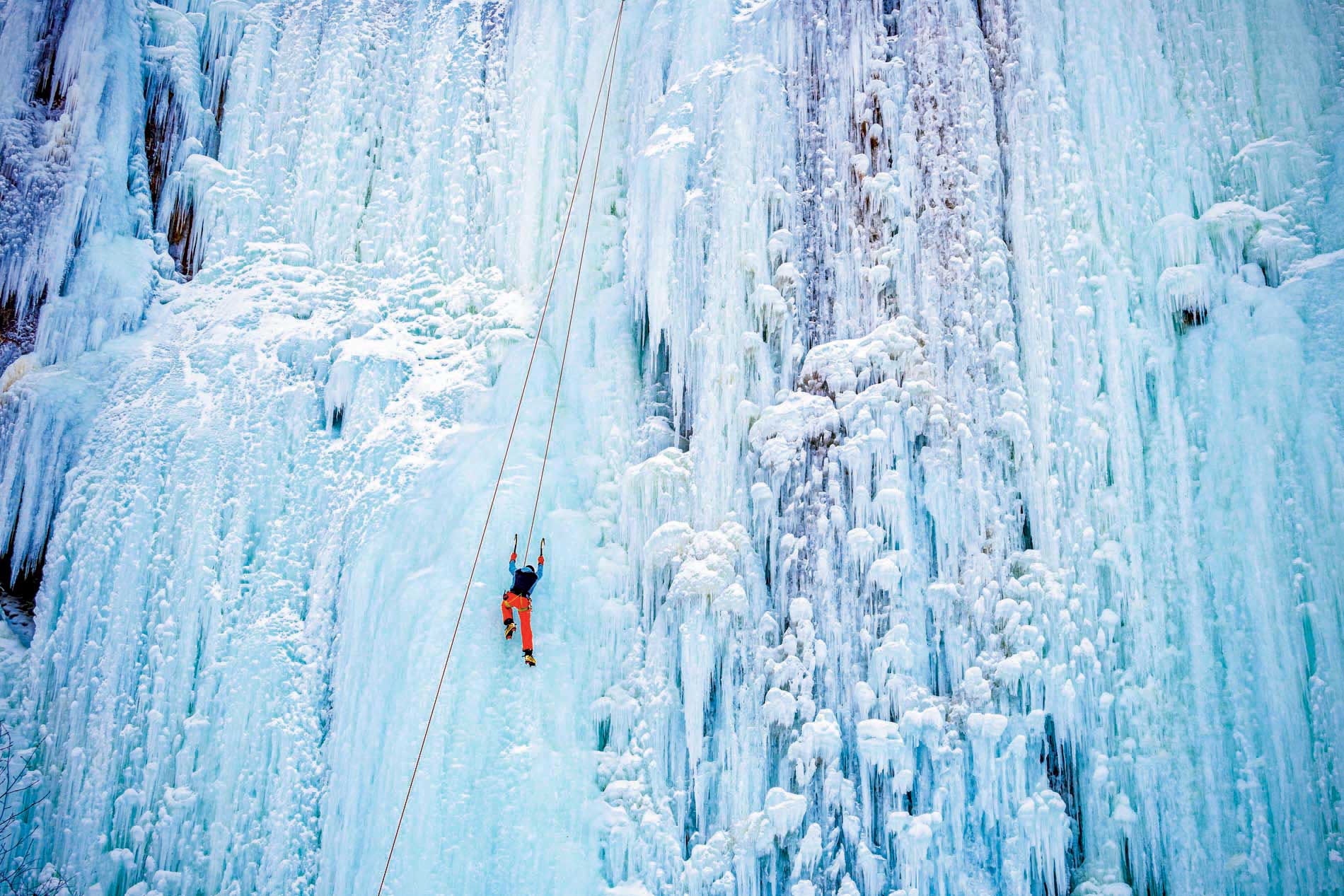
Which may not be what you would have expected from an economics major with a concentration in finance, but the story is just getting started. Less than four years into his career, Weiss has reached professional as well as physical heights. One of his images was named one of the top 100 nature photographs in the world as part of the Nature’s Best Photography International Awards in 2024. He now lives in Golden, Colorado, and builds his life around climbing mountains, shooting photographs at sunrise (or sometimes sunset) and displaying and selling large-format fine art prints of the resulting images.
You could say the changes started in 2020, when Weiss’ mother died of cancer and he began asking questions. “It sounds kind of cliche,” he says, “but I ended up just being like, life is short, and I’m gonna try to pursue what I’m passionate about.” Not that he hated his work in finance – he actually loved it. In fact, he was pursuing his love of mountaineering and photography as a weekends-and-vacations thing when he got held up at gunpoint in 2021. Halfway between a climb in Telluride, Colorado, and his Santa Monica, California, home, he pulled off the road to snooze in his Subaru.
“I was awoken by a gentleman with a gun pointed at the window.” Things went downhill from there. Three assailants pointed guns at him and asked him which one he’d like them to kill him with. For his ability to talk them out of killing him Weiss credits his calm nature, but they still sprayed him with bear spray and drove off with his truck and all his equipment – though they did swing back to throw him a water bottle. He hitchhiked into town.

He was already thinking about making a change. Half a year later he left his job to focus on photography and climbing mountains.
Neither of which were new. An only child, he had grown up close with his parents, vacationing in national parks, and falling in love with mountains. His dad loved photography and gave Weiss a camera the summer before his junior year when he went on the summerlong Duke Geneva program. “I kind of had a little spark on that trip,” he recalls. After that – and a single photography course – “it was just kind of going out and practicing.”
Weiss credits Duke for some of his changes: He focused on not just his economics degree but also on other liberal arts, getting certificates in decision science and PPE – philosophy, politics and economics. “I think having that foundation in place, studying human behavior and human thinking, was instrumental in terms of being able to be OK going into an uncomfortable and unknown space,” he says.

And he emphasizes: “It wasn’t all at once: ‘OK, I’m quitting my job tomorrow.’ I had a foundation in place prior to these things happening.” He lost his mom, and that made him think: “Long term, I knew I wanted to make some type of change.” Then came the robbery, and he thought: “Man, I don’t want to look back at my life with regret.”
It’s gone well. He has won gold ribbons and best of show in juried art festivals all over the country, and one of his images was used as the cover of the 2025 Glacier National Park calendar, produced by the Glacier National Park Conservancy. He focuses much of his time on the Rockies, but he travels to shoot all over the United States, Canada and, of course, the Himalayas.
Much more important, he’s gone past that fear of regret. “In our daily lives, everything is so cumbersome,” he says. He loves his work now because it takes him into the flow state he learned about in psychology classes: “You’re doing something that requires your full attention. I seek those moments because it’s just such a beautiful way to live. To be there, climbing, where you’re just completely conscious.”
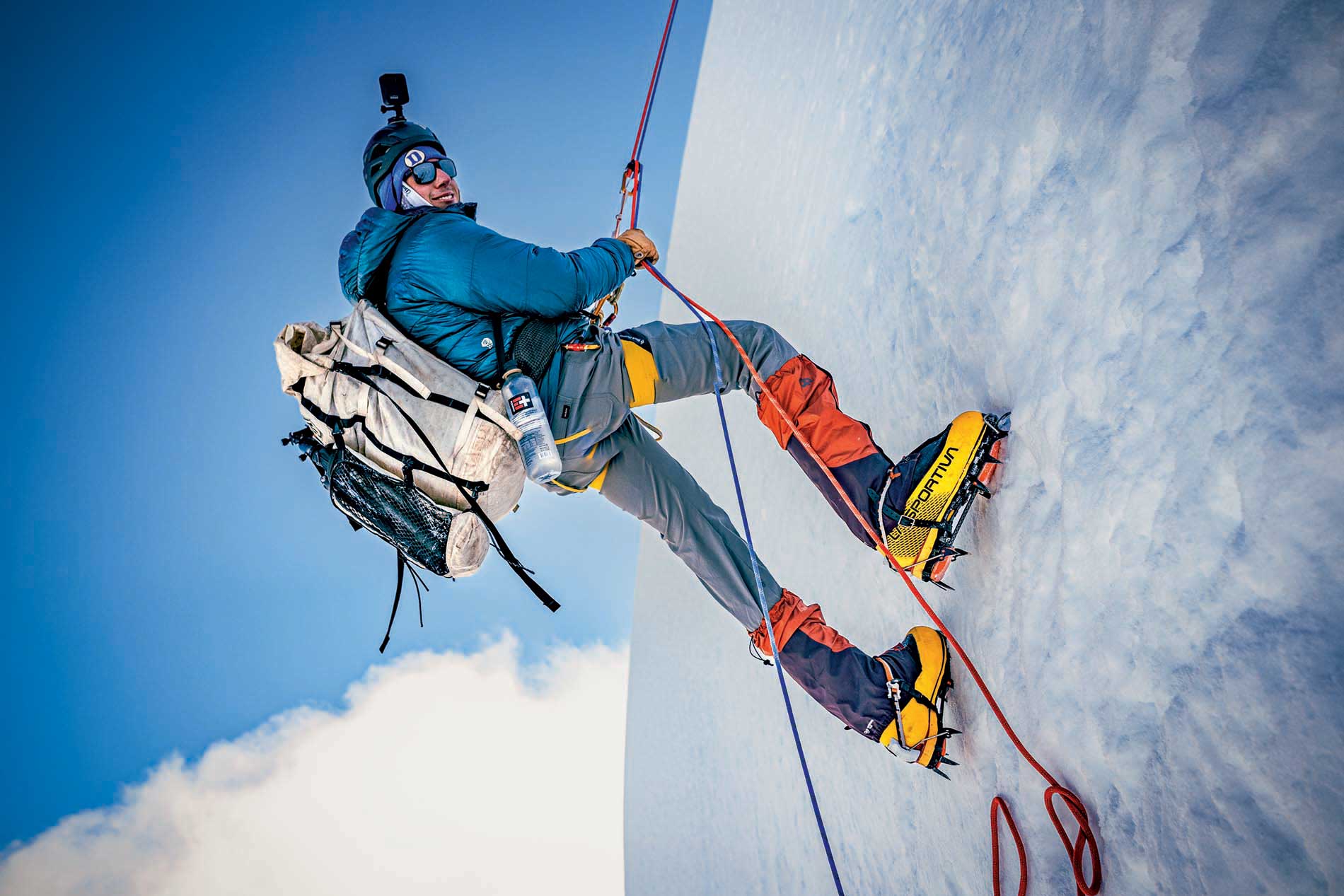
Even summiting Everest – from the less-traveled Tibetan side – and climbing past the frozen bodies of people who had much poorer outcomes didn’t make him question his choices. “It’s just special to put yourself in those extreme environments and to see the most beautiful things in the world that very few people ever get to see, and to be able to capture that and bring it down to share with people.”
Climber Leif Whittaker, whose father was the first American to summit Everest, worked with Weiss for months to prepare him for his Everest climb. He says he admired Weiss’ drive during training. “He would sort of forget the parameters of the workout and would end up going longer than prescribed,” he says. “Which isn’t a bad thing for training.” And Weiss was not only doing his training after a day of working with galleries or art shows, climbing even then with his gear. “He’s also capturing, like, a sunrise image from the top of the ski resort.”

About those images: Colors fairly leap at the viewer, with saturation levels like those we recognize from social media filters. But not Weiss’s images: There’s not a single filter, which Whittaker confirms. “At altitude, the color of the sky changes. It’s this deep blue completely different than even the clearest day at sea level. He’s able to capture those moments and convey them to the public in a way that’s … like, oftentimes photographs don’t do justice to the real scenery. And his photography I think captures it very well, in particular in the fine art world.”
Which, Weiss notes, is kind of funny. The very shows he exhibits at now are the type of art shows his mother used to take him to as a child. “I actually detested going to art shows when I was a little boy,” he says. “And now I’m an artist showcasing in those exact shows. It’s a cool full circle.” And his mother’s ashes may have blown into the wind from the roof of the world, but Weiss keeps her around electronically. Every Tuesday, his iPhone sends him a preprogrammed message: “You won’t get today back. Live for Mom.”
