
Journalism always seems to be on the ropes. Local papers close. Large papers downsize their newsrooms and downsize them again. Disinformation and polarization run rampant in the United States.
And yet journalism, at least as of press time, won’t go down.
“I think I sound like Jeff Goldblum in ‘Jurassic Park,’” journalist and author Bronwen Dickey ’03 says. “Journalism finds a way.”
Indeed, in her former adjunct professor role at the DeWitt Wallace Center for Media and Democracy, Dickey taught Duke students passionate about the field. Chrissy Murray A.M.’14, general manager of student paper The Chronicle, has seen a notable increase in interest over the past few years. Among today’s students, some remain driven toward journalism, sometimes over the protest of parents who wish they would pick something stable and lucrative.

“The trade-offs are immense,” Dickey says. “You have to believe in [the work] with a fervor that was not as required for every single person on the job 20 years ago.”
So why do they do it? And how do journalism professors prepare them? We gathered instructors and journalists, including two student journalists, for a roundtable focused on the new generation of journalists and the world they inhabit.
In our conversation:
- Bill Adair, Knight Professor of the Practice of Journalism and Public Policy, who is also the founder of PolitiFact and a former reporter and editor at the Tampa Bay Times.
- Dickey, who is now an editor at North Carolina nonprofit newsroom The Assembly.
- Michaela Towfighi ’22 worked for the Concord (New Hampshire) Monitorthrough Report for America before a culture reporting stint at The New York Times on afellowship. This summer, Towfighi started as a higher education reporter with Boston Globe Media.
- Jake Sheridan ’21 is a member of a Pulitzer-winning team at the Chicago Tribune.
- Senior Ana Despa is the editor of Duke student newspaper The Chronicle.
- Sophie Levenson ’26 contributed to The Chronicle’s sports section and is driven by an interest in community journalism.
Our roundtable conversation was edited for length and clarity.
Corbie Hill: What drew each of you to journalism?
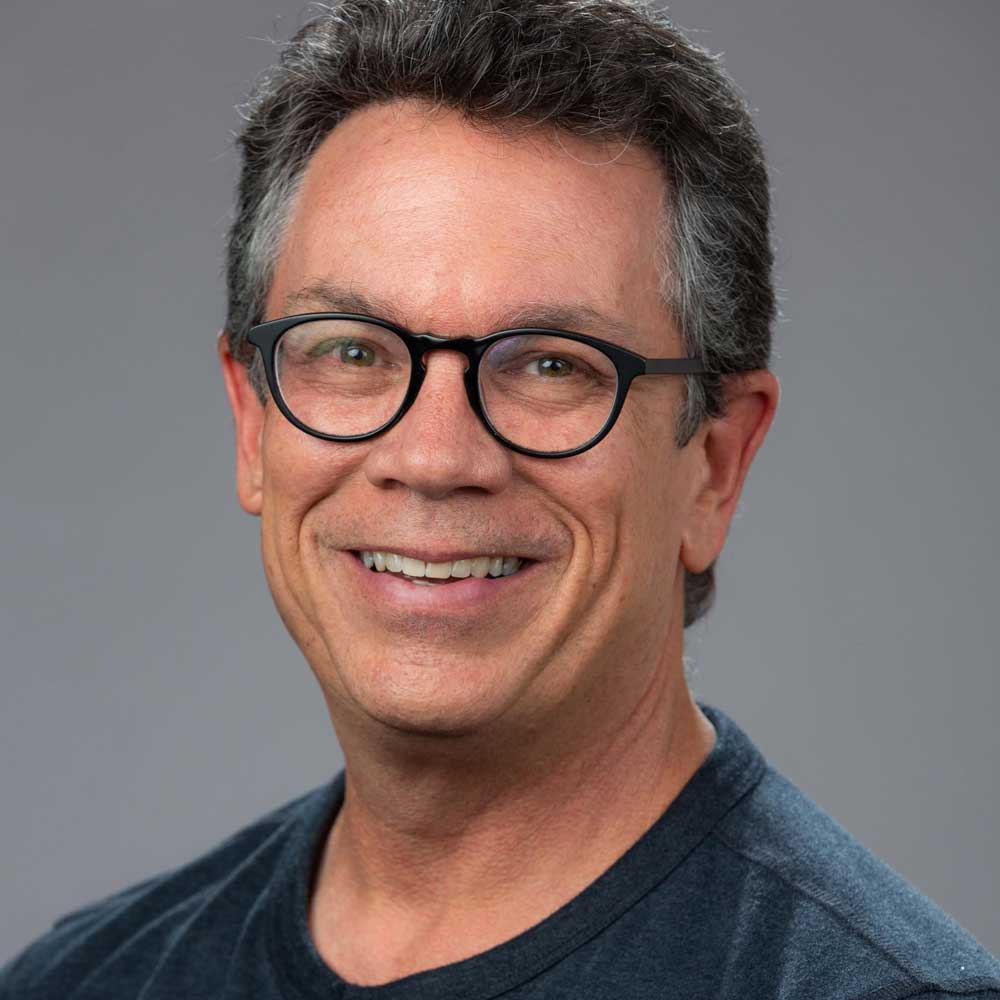
Bill Adair: I got into journalism because my mother told me to. She was like, “You should be a reporter, you'll like it.” She was right. I love it because it's a license to be curious.
Bronwen Dickey: I sort of fell into it backwards. I'd always really enjoyed creative writing. I had very lofty ideas about what the literary life was going to look like, and I had no idea about anything. I'd never done any reporting. I didn't know how to write about other people.
Then I realized that writing about me was incredibly dull. I applied to a nonfiction writing program at Columbia, and for some reason they let me in. I met all these people who had been writing for magazines for years. They were so inspiring and they were doing work that was so important.
Instead of the arrow going toward me – Is my writing good? Do people like me? Are people going to read this thing I wrote? – I turned it around. How can I be of service to other people? How can I tell stories that reach other people? I have never wanted to do anything else since.
Jake Sheridan: My mother was a local TV reporter. It was always in the back of my mind and I cared really deeply about politics. When I got to college, I took some kind of clumsy attempts at opinion writing first. I realized really quickly that no one at all cared, nor should they have. Seeing how disinterested both me and other people were in my opinions, I tried to write some articles. People liked them, and I liked writing them. I got to meet cool people, and I got to cast light on things that I thought mattered.
This work has taken me to such amazing places. I fell in love with it because it allows you to be in the middle of things, but it allows you to also grant yourself the grace of not having to know everything.
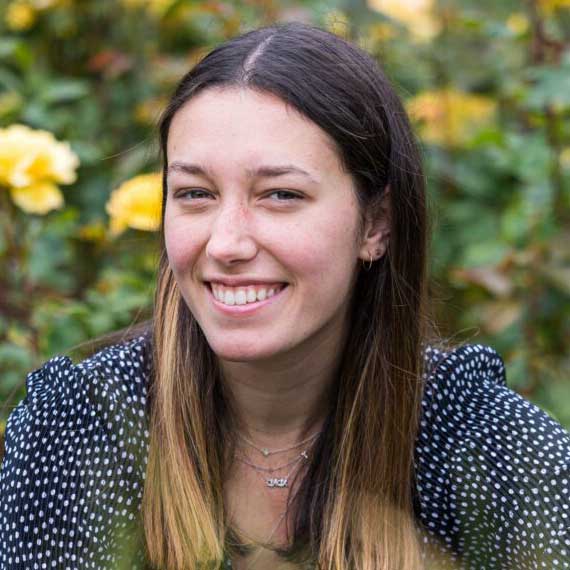
Michaela Towfighi: I went to an international school [in London] where a lot of diplomats' kids would go. There was a large security risk. One day there was a bomb scare at our school. I was in eighth grade, and my journalism adviser pulled me out of class and was like … “In five minutes, the school is going to get evacuated. Go get a notebook. When you head to the park with everyone else, start talking to people.”
In the end, we ended up writing a story about what happened that day. When we published, we noticed that the BBC had published their own version of the story.
We were reading the story as eighth graders, being like, “That's not true.” My teacher was amazing. He called the BBC and was like, "I have a group of student reporters who are students at the school. They have been here all day. Did you ever come to campus? How did you do your reporting?” We got on the phone with them. Basically, they never showed up.
We were the ones on the ground. They got it wrong. We had the crazy experience of correcting the BBC. At the end of the day, our principal emailed the school, [saying] “If you want to read what happened, you should read the middle school newspaper.”
Sophie Levenson: I was always going to do something with writing. I've always been a reader and a writer. Journalism was always like, so that’s how you do writing as a job.
The writing part came first for me, and then the reporting. I've always enjoyed talking to strangers and learning about other people.
The Chronicle was the first place that was my home at Duke. I wanted to be as involved as possible, and that meant becoming a student journalist.
Ana Despa: I was drawn to The Chronicle because I just wanted to understand my community. As a Duke freshman, I wanted to better understand Duke and Durham. Journalism is that excuse to ask questions and to find someone who you wouldn't really interact with if you weren't doing a story or actively trying to better understand your community.
The storytelling side of it really drew me in. It gives you a platform to be able to tell stories that matter to a community.
CH: Does journalism feel stable enough to go into as a young professional?
Towfighi: It definitely is intimidating. I've had to think about personal and professional trade-offs.
I do think that there are jobs. Out of college I did Report for America, which I loved and really credit for building a strong foundation for me for local community journalism. Twenty years ago, that probably would have been everyone's job prospects out of college: Go work for a small paper and build your way up from there. Today, a lot of those small papers are under-resourced and stretched thin. You have places like Report for America that are helping to fill the gaps. The Concord Monitor, where I worked, had been around for decades. It was legendary in its lore. When I started, there were four [reporters].
Everyone was moving to New York when I graduated from Duke and I was moving to Concord, New Hampshire. This is just so different than what a lot of my friends are doing.
Levenson: There is a lot of great stuff happening in the nonprofit journalism space. There are some stable local newspapers that are managing to do well, or at least stay steady. I really believe in journalism. A lot would have to happen for me to stop pursuing this, regardless of how stable it is.
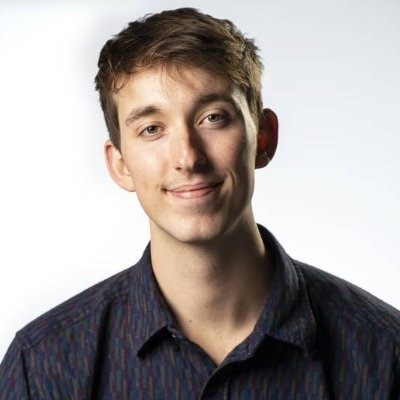
Sheridan: There's not a single doubt in my mind that this work needs to be done. There's also not a doubt in my mind that it will be done, and the people who choose to do it are increasingly having to make sacrifices to do it. They also get to reap the reward of having this incredibly fun life and empowering life.
I guess there's a presumption that other industries are more stable. I'm not so convinced.
Journalists need to be clear-eyed that the number of people spending money on newspapers is shrinking. That will harm our ability to stay in this work, but there are so many people doing great and new things. There are opportunities on social media. There are opportunities within nonprofit spaces.
Despa: As a Duke student, I think the culture is that you should rack up all these safety nets. I kind of view consulting and investment banking, the two biggest things that Duke students go into out of a want for money and stability, as a safety net. You go into [those fields] and you know that you'll be secure for at least a couple of years. Once you leave that, you have pretty good exit opportunities.
I do see myself getting drawn into journalism, but I also do see the appeal of having that first career being essentially a safety net. Stability is something that I don't necessarily see in journalism.
Sheridan: There's incredible instability, but that also creates incredible opportunity for young people. The beat I have that I got when I was 24, covering the mayor of Chicago for the Tribune – that would never have happened 15 or 20 years ago.
Dickey: I think the type of person who goes into journalism [today] is different. It really has to matter to you. It's now more the type of person who would go into like social work or the clergy or public legal aid or something. [A friend] and I were talking about this. Now, people who go into journalism, it's more like being a gigging musician. You're going to play a small club. You might play an amphitheater. You might play an arena. You might be playing, like, the VFW. You have to cobble things together and be OK with that.
Adair: So many [students] feel pulled into careers that they don't love for a variety of reasons. Life's too short to do something you don't like. I've loved every minute that I've been a journalist and a journalism professor.
Hill: How is the new generation of journalists using new forms of media?
Adair: Jake [Sheridan] is a great example of that because Jake shared in the Pulitzer Prize for local news with the others on the Chicago Tribune staff. One of the pieces was some of the tremendous work that Jake has done on Instagram.
Sheridan: Instagram, TikTok, short videos.
People need our work, and they aren't reading print newspapers as much, or magazines. We should meet them where they are. When I've tried to do that, it's gone well for the most part. People have been excited to see the work that a print journalist does in the space that they are in. It's given me tremendous hope that we can find ways to make this work sustainable.

Despa: [The Chronicle] launched a new multimedia department this past year, mainly just to grow our social media engagement. That's why our videos and our Instagram have been able to take off. We try to put out a short video every other day. Some of them regularly get 100,000 views. We've grown our Instagram following by almost 90 percent in a year.
There is a criticism of dumbing down a story into a minute or 30-second video clip. It is a fine balance between wanting to produce content that pulls people in, but also wanting to protect the integrity of a longer form story. It's difficult to do, but some people do it very effectively.
Sheridan: The print work has to come first. It's the foundation.
Towfighi: At the Concord Monitor, when I was there, we had an Instagram that hadn't been posted on in years. We figured out what the password was and we got into the account. [There] was basically a group of younger reporters who were like, “We need a social media following. Every day when we publish an article online, we need to post it on Instagram.” That has completely driven our engagement, especially with younger readers. We now have high school students in Concord who engage with the Concord Monitor.
Dickey: I'm a print diehard. That's my background. I love putting all that work into a long narrative feature story. It's always going to be my first love.
I will say that when I see my students as they become more proficient in photo, video, audio, podcasting and stuff like that … if you have to capture original photos and you have to capture original video, and you have to have interviews with people at the event, you have to get out there in the world.
Hill: Does AI have a role in the newsroom?
Adair: I taught a class in the spring, the AI Journalism Lab, and the idea was to have the students build AI tools that could help journalists. They did a great job identifying tasks that AI could do that were tedious and time consuming and then built tools that help journalists have more time to do the human things.
Levenson: I don't ever use AI yet. I know I sound like a Luddite. At least in the sports section, we don't use it. There's really no reason to do so with most of the stories that we're writing.
AI is one of the things that freaks me out the most as a young person trying to go into journalism. It's getting harder to tell when something is written by AI versus not. I'm not interested in reading something that's generated by a computer. What's the point of that?
Towfighi: I have found AI to be helpful when it comes to things that I don't have the resources to do myself in a newsroom. We at the Concord Monitor did not have a data journalist, but I would work on stories that involved huge data sets, or I would build my own data sets. I have very basic coding knowledge. That's where AI became helpful to … sort through data.
I draw the line at anything that would involve or influence my writing. I am all for data, documents, translation tools. I worked on a story in the Times where I was corresponding with people who lived all across Europe. They wanted to send me documents from museums that they worked in, and they were pamphlets that did not have an English translation. Through the help of colleagues who work on an AI team at the Times, we were able to translate those documents. I was able to correspond with a woman in French for most of my interviews. But I fear for a world in which people then say, “Why doesn't AI just write this?” or “Why don't you proofread with AI?”
It's important in journalism to explain how you're using [AI] and when you're using it, so having disclosures or methodologies. I think people's defunct assumption now is that AI is muddling journalism somehow. It’s important to explain to what degree it's involved.
Dickey: I completely agree with Bill [Adair] that there are lots of things you can automate that allow you to be out in the field more. If you have millions of pages of documents with inscrutable data tables, or you just need to go through a ton of material, that isn't humanly possible.
But I can say I am existentially terrified from what I am seeing, and how rapid the normalization has been for students. As of even the fall semester of this year, I had never had any suspicion that anyone had turned in anything AI. I know it's getting harder to tell, but you still can tell. There's a packing peanuts quality to it. It's a lot of smooth sentences that don't say anything.
This spring, multiple [students], multiple times in one small seminar, tried it. I was surprised that they were doing it, because it is straight-up plagiarism, as much as if you were taking a photo of a book page and passing it off as your own writing. I took it almost personally. You have no idea how many hours I put into this class, and how much I care about doing a good job, and how much I want to teach you these skills. You're going to try this on me, a journalist of all people. We figure things out for a living.
Despa: AI can't do original reporting. AI can string some sentences together, but it can't go and interview someone.
I do think that it could be useful before the words hit the page. Maybe if you have a stack of 1,000 documents and you want to identify patterns through them. I think that's something that AI is really good at because AI is built on patterns. In terms of writing and editing, I don't really think it has much of a place there.
Sheridan: We absolutely should keep it away from our writing because that must be a human act. I’m afraid of greedy corporation owners using AI as an opportunity to not help us get into the field and report more, but to replace our labor and to cheapen the work that we do. That would be so bad.
Being out in person and reporting is the thing that AI can’t do. One thing AI can't do is like dap someone up. I dap up a politician and they start telling me their secrets. A politician is not going to tell AI any of their secrets.
When I was a general assignment reporter, one of the most important things I did was go and knock on the door of people whose young children were killed, usually shot to death. Our world would be so much worse off if that didn't happen, if we as a society didn't show up and say, “I care enough to try to figure out who this person is. I'm going to listen to you.”
If we try to cut corners, we're losing a lot of those things that make our world a much better place, a place where people care about one another.
Dickey: My friend Corey Johnson, who won a Pulitzer a couple of years ago, I always think about what he says. I tell it to every single student. As a reporter, you have the opportunity to show up for people who have never been shown up for before.
That's a flag that you plant on the side of humanity, and there is absolutely no substitute for that.
Hill: For the younger journalists, what are some differences you glean about the way things were in the field 15 or 20 years ago?
Towfighi: I heard this a lot at the Concord Monitor. The printing press used to be in the building. There was an element of hitting send on a story and hearing it go to the printer. The whole idea of “stop the presses” was legitimately people running across the newsroom to stop presses.
Now, news is really a 24-hour cycle that, for better or for worse, is nonstop. Working for a predominantly print paper to start my career, I saw the deadlines – we had to hit a print deadline. Only certain things made it into the paper the next day.
Even over the few years that I worked there, we were starting to do little notes in the paper to say, “We know there was an election tonight. Go online for our coverage.” Then our day wouldn't stop when we hit send on the paper like it used to. We would be out reporting all night and updating our website and constantly trying to bring people there, in addition to just this print product.
Working at the Times was interesting. With offices across the world, the news was genuinely 24 hours. When I finished something in New York and I still needed eyes on it, I could send it to an editor in Seoul who would read it while I was asleep. They would send to an editor in London, and then London would get back to me in the morning. It’s a never-ending cycle. Print deadlines used to provide cadence to the day.
Despa: As I've kind of heard from journalism professors or people that currently work in the industry, massive layoffs will happen every three months. The newsroom size is a lot smaller than it was 15, 20 years ago, and they rely on AP wire reporters to cover local news, as opposed to being able to send reporters to those locations.
Hill: What are some sources of optimism or excitement in modern journalism?
Despa: What I see when I look at journalism in this country is a free, independent press. That's super valuable. One of the goals of journalism is to hold power to account and to also inform the public. What is going on in the government? What is going on in the world? What is this corporation doing? What is this company doing? Our newspapers are effective in doing that. The quality of writing is great.
Obviously, there's a readership struggle. That is fundamentally a problem. I do think that there are a lot of younger people that are interested in subscribing to a newspaper, or they are interested in reading the news.
Towfighi: I go back to nonprofits and foundations and things like Report for America. It was awesome for me to be so in tune with this network of people who view journalism as a public service and a necessary piece of civic life, democracy and community engagement. Politics aside, it's helpful to know what's happening in your town.
I know the Press Forward Foundation was giving grants to different newsrooms to expand their staff. I also really like partnerships between national organizations and local newsrooms, like ProPublica is doing.
I am about to go cover higher education [at The Boston Globe] and I know the Crimson at Harvard will be one of my main competitors. That's awesome. It's the same at Duke. There's more of a national spotlight on what is happening on the ground on campuses, and who's better to say that than students who are there? I've been really impressed by student journalism.
Even if the field might be shrinking, the interest does not seem to be shrinking. I've come back to Duke now a few times and talked to classes. It makes me excited to see so many students interested in Duke's journalism program, interested in The Chronicle, interested in The 9th Street Journal, interested in just writing and pursuing that as a career path.